
Quickly convert common cooking measurements including cups, tablespoons, teaspoons, fluid ounces, milliliters, and liters.
Quick Cooking Measurement Guide
Note: This converter is for volume measurements. Converting cups to grams or ounces by weight depends on the ingredient, so flour, sugar, butter, and other ingredients require separate conversions.
About This Cooking Measurement Converter
Cooking measurements can become confusing when a recipe uses a different measurement system from the one you normally use. American recipes often use cups, tablespoons, teaspoons, and fluid ounces, while many recipes elsewhere use milliliters and liters.
Our cooking measurement converter makes it easy to switch between common volume measurements without doing the calculations yourself. Simply enter an amount, choose the measurement you're starting with, and select the unit you want to convert it to.
US Cups vs Metric Cups
One important difference to remember is that not every cup measurement is identical.
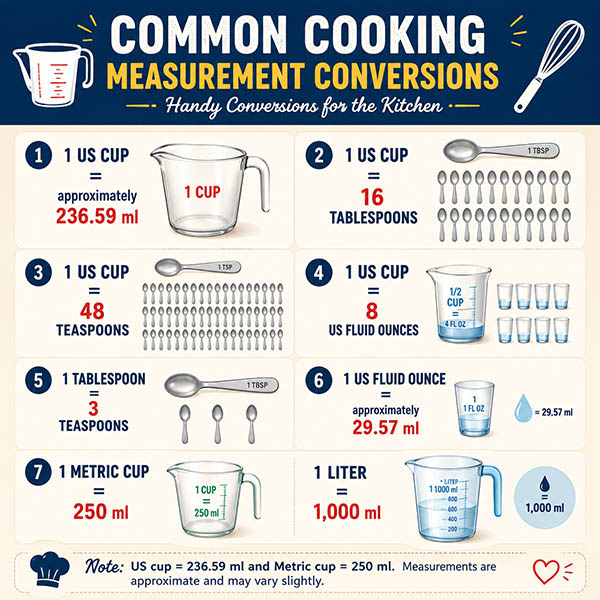
A US cup is approximately 236.59 ml, while a metric cup is 250 ml. The difference may seem small, but it can become more noticeable when a recipe calls for several cups of an ingredient.
If you're following an American restaurant copycat recipe, the recipe will usually be based on US measurements unless stated otherwise.
Common Cooking Measurement Conversions
Here are some useful conversions to remember:
- 1 US cup = approximately 236.59 ml
- 1 US cup = 16 tablespoons
- 1 US cup = 48 teaspoons
- 1 US cup = 8 US fluid ounces
- 1 tablespoon = 3 teaspoons
- 1 US fluid ounce = approximately 29.57 ml
- 1 metric cup = 250 ml
- 1 liter = 1,000 ml
For the most accurate result, use the calculator above rather than trying to estimate unfamiliar measurements.
Fluid Ounces and Ounces Are Not the Same
This is an important distinction when converting recipes.
A fluid ounce (fl oz) measures volume, while an ounce (oz) measures weight. They cannot automatically be substituted for one another.
For example, 8 fluid ounces of an ingredient tells you how much space it occupies. Eight ounces by weight tells you how heavy it is.
That's why this calculator handles volume conversions separately from weight conversions.
Can You Convert Cups to Grams?
Yes, but you need to know which ingredient you're measuring.
Unlike converting cups to milliliters, there isn't one universal cups-to-grams conversion. A cup measures volume, while a gram measures weight.
A cup of flour, a cup of sugar, and a cup of butter occupy approximately the same volume but have different weights because their densities are different.
For this reason, use an ingredient-specific cups-to-grams conversion rather than a generic conversion whenever a recipe gives an ingredient by weight.
When Should You Use a Kitchen Scale?
For everyday cooking, cups and spoons are usually convenient and perfectly practical. For recipes where precision matters more—particularly baking—a digital kitchen scale can provide more consistent results.
Weight measurements are also helpful when scaling recipes because ingredients can be multiplied more precisely without worrying about how tightly something has been packed into a measuring cup.
If your recipe lists ingredients by weight but you prefer using measuring cups, try our Grams to Cups Converter for Cooking & Baking. Simply enter the amount and choose your ingredient to get an approximate conversion between grams and US cups.
Ready to Put Those Measurements to Use?
Now that you've got your measurements sorted, find something delicious to make. Explore our copycat recipes, restaurant-inspired favorites, and homestyle classics.
Recipes
Browse all our homemade recipes, from easy meals and sides to sauces, desserts, and family favorites.
Explore RecipesRestaurant Inspired Recipes
Make popular restaurant dishes at home with our collection of copycat recipes and menu-inspired favorites.
Browse Restaurant RecipesBrenda Gantt Copycat Recipes
Discover Southern-style favorites inspired by Brenda Gantt, including comforting classics and homestyle dishes.
Explore Brenda Gantt RecipesPopular Restaurant Recipes
Explore copycat recipes inspired by popular restaurants including Texas Roadhouse, Outback, CAVA, Applebee's, and more.
View Restaurant Favorites